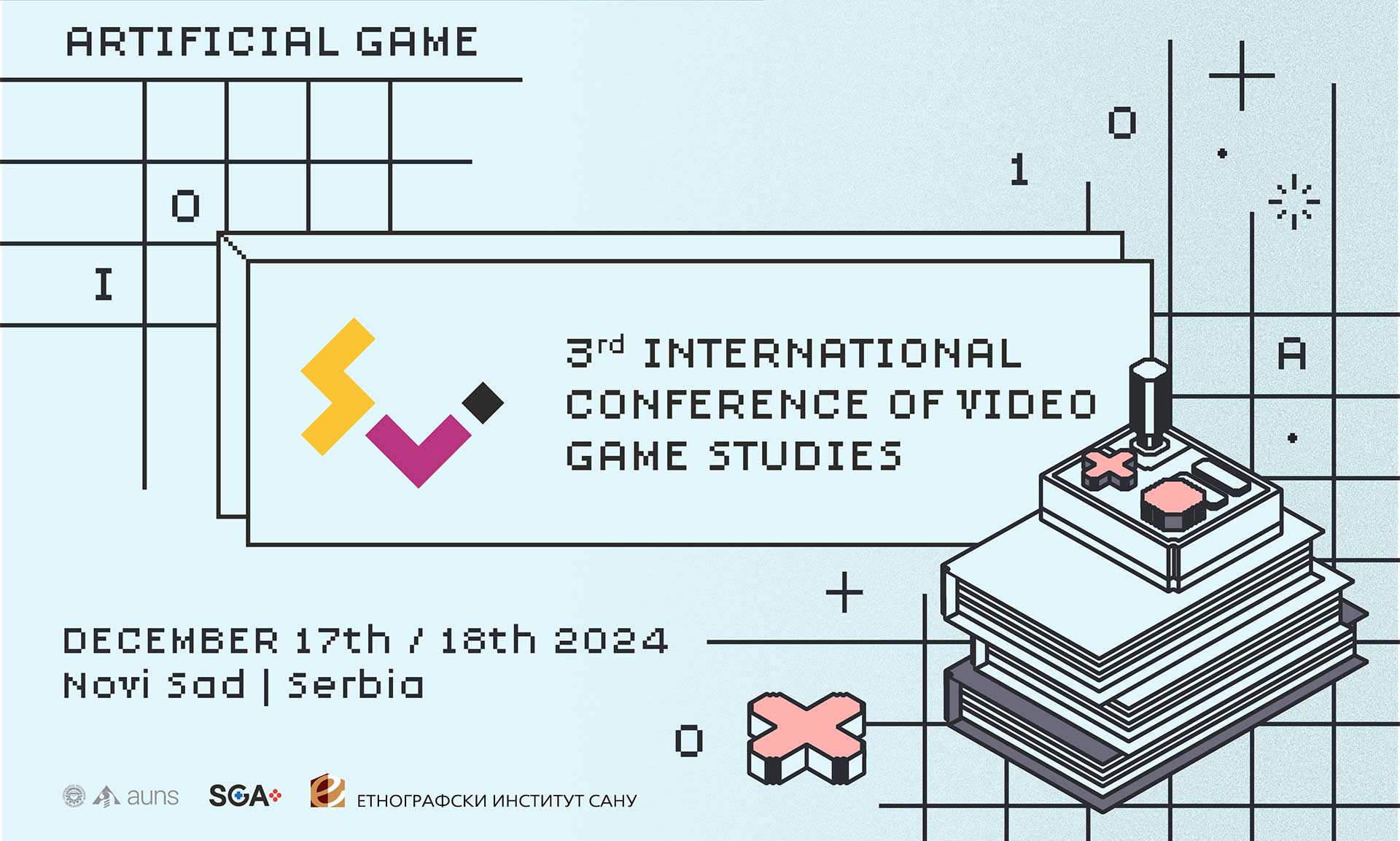

Artificial Game
The development of computational intelligence has been closely related to the principles of games from the very beginning. Alan Turing (1950) was among the first to wonder whether machines could master imitation rather than whether they were able to think, and his followers and other scientists developed these ideas further, by creating computer games such as tic-tac-toe, nim, checkers, and chess. Today, artificial intelligence is the driving force behind many questions concerning some of the most diverse aspects of human life, from its role in production, education, medicine, art, ethics, law, communications, transportation, finance, all the way to its role in the development of video games.
This situation has inspired countless new conferences and led to a renewed interest in the social sciences and humanities, which were invited to reflect on the fundamental issues of the acceleration of technological development. In our case, this situation has caused a double reflection and inspired questions about what artificial intelligence as a technology brings to video games (and vice versa), but also what video games themselves represent as artifacts that are simultaneously programmed technological creations and nevertheless more complex than the sum of their parts.

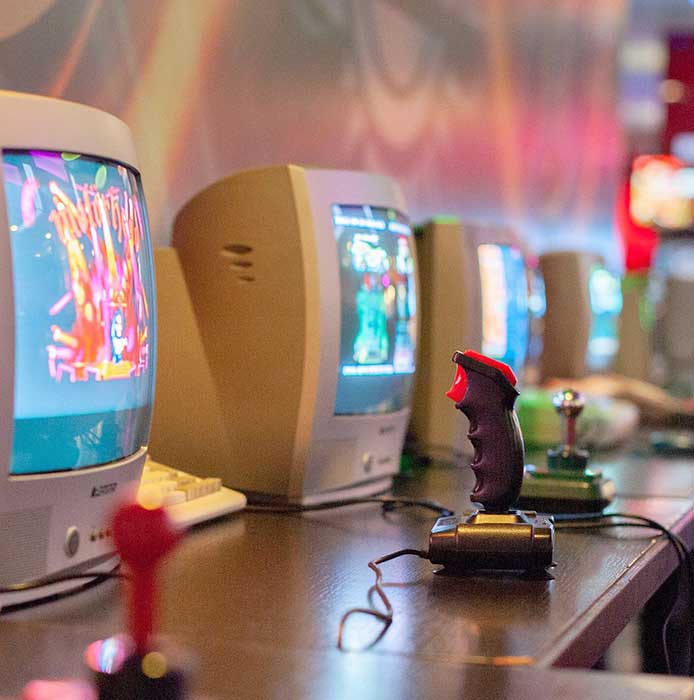
Until the latest breakthrough in the study of artificial intelligence, its use in video games was primarily limited to NPC interactions with the player. It has now become clear that, at a time when many companies have already developed generative programs that automate tasks in the domain of game art, animation and narrative design, the emergence of artificial intelligence hints at drastic changes in production, ways of playing and changes in games themselves. Automation of creativity, a phrase that sounds like an oxymoron, has become a reality in many creative industries, especially with artificial intelligence capable of learning and being creative thanks to the availability of huge databases. This is especially true in the video game industry which has always used the latest technologies to create the best video games possible.
Artificial intelligence currently raises a number of questions: Will this technology encourage or stifle creativity? How will these changes affect personnel structures, or the wellbeing of employees? Will new professions appear, while others will disappear? To what extent will the new technology be available to smaller studios? What are the pitfalls of plagiarism and unethical approach to AI and game design? Will the likelihood of addictive behavior increase? Are we about to flood the market with games? What changes will occur with more complex communication with NPCs? Will changes in games stop at the aesthetic, or will new mechanics, rules and gameplay appear? How will AI affect the gaming experience and ways of playing?
In addition to all these issues, the emergence and accelerated development of artificial intelligence has a number of implications ranging across interpretation, consumption and production, closely related to the nature and medium of video games. In addition to being industrial products, video games provide their players with the opportunity to immerse themselves in synthetic worlds and feel present in them. Video games are simulations, artificial dynamic models that simulate spatial relationships, things, beings, events and activities at different levels of abstraction. They generate virtual reality which can be seen as a false image of reality (Baudrillard, 1996) or as an environment filled with the potential (Lévy, 1998) of establishing social connections, education, medical therapy, etc.
Because they are designed, artistically processed and programmed, composed of procedurally determined rules and algorithms, audiovisual and narrative elements that shape the gaming experience, video games can at once represent cultural artifacts which testify to the technological achievements and cultural assumptions of the time in which they were created, and ideological constructs, because they reflect beliefs and values and thus influence the way of thinking and behavior through narratives, characters and mechanics; they can simultaneously be cultural heritage, and the media for preservation and digitization of cultural heritage; a means of entertainment, and a means that shapes our view of the world – at the same time a computer program, andspace for performing different identities, and a learning machine (Gee, 2005) with educational potential.
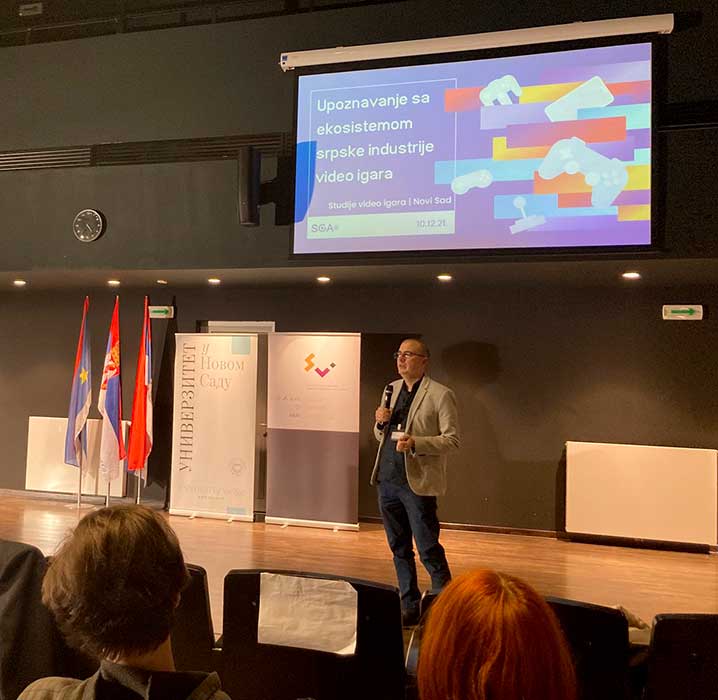
Until now, engineers, developers and other professionals in the gaming industry have mostly grappled with issues that are quite different from those preoccupying the academic community. Being the first to encounter artificial intelligence and its application in various industries, as a rule, these professionals have faced different challenges than academics, who primarily observe and analyze such phenomena. Hence, one of the tasks of the SVI conference is to connect these two worlds – to theorize developer practices, while also making academic theories more practical.
The current position of artificial intelligence in the public sphere has made it an obvious inflection point, and the phenomenon of the artificial was chosen as the optimal starting point. In the same sense in which a video game is constructed at the level of (cultural) code, art itself is institutionally and discursively constructed (Danto, 1964), and additionally mediated by media and experience – thus artificial. For their part, video games are an artistic medium through which artists communicate with audiences, both in traditional art institutions and through the Internet.
Literature:
- Baudrillard, Jean (1996). The Perfect Crime. London: Verso.
- Danto, A. (1964). The Artworld. The Journal of Philosophy, 61(19), 571–584. https://doi.org/10.2307/2022937
- Gee, J. P. (2005). Learning by Design: Good Video Games as Learning Machines. E-Learning and Digital Media, 2(1), 5-16. https://doi.org/10.2304/elea.2005.2.1.5
- Lévy, Pierre (1998).Becoming Virtual: Reality in the Digital Age. New York: Plenum Trade.
- Turing, A. M. (1950). Computing Machinery and intelligence. Mind, SIX(236), 433–460. https://doi.org/10.1093/mind/lix.236.433
SVI 2024
Keynote speakers
Espen Aarseth

Espen Aarseth is Dean and Chair Professor of Game Studies, School of Creative Media, City University of Hong Kong, and a member of the Royal Danish Academy of Sciences and Letters and of the Academia Europaea. He is founding editor of the journal Game Studies (2001 – ), and recently directed the European Research Council’s Advanced Grant project MSG – Making Sense of Games (2016-22). He is also a special terms professor at the Digital Media Department, School of Art and Communication, Beijing Normal University.
Julien Millet

Julien Millet is an AI engineer with 25 years of experience, known for founding multiple studios and leading award-winning projects. He currently serves as president of the Game Only cluster and co-founder of United Bits Games. Julien is spearheading a comprehensive study on the transformative impact of AI technologies within the gaming industry, focusing on innovation and future developments. His extensive expertise in both technology and creative leadership has contributed to shaping the next generation of interactive experiences.
Plenary speakers
Nikola Vasiljević

Nikola Vasiljević is Head of Insights at Mad Head Games and a passionate data advocate. With 13 years in research and analytics, he has worked as an analyst/consultant at GfK and held insights and innovation management roles at Henkel and Molson Coors. He has been working in video game industry for six years. At Mad Head Games, he cultivates a data-driven culture, leveraging data to build a great games portfolio and support designers in creating better games. His expertise spans quantitative and qualitative research, big data analytics, machine learning, and data visualization. His mission is to promote data-driven culture and spearhead data transformation in modern businesses.
Marko Jevremović

Marko Jevremović is a seasoned Data Scientist in the Mobile Games Industry and a co-founder of Asemic Analytics. He is focused on developing advanced data warehouse-native Product Analytics platforms. His dedication to product development, both as a Product Data Scientist and creator of data tools, fuels this innovative venture aimed at equipping developers with essential tools. Marko previously led the Analytics and AI team at Two Desperados and spent nine years at Nordeus, bringing extensive experience to emerging AI trends.
Themes
The conference will address these questions in three major thematic blocks that highlight the phenomena, dilemmas and preoccupations of the video game industry and game studies in a way that stimulates deeper understanding and collaboration. Suggested themes include but are not limited to:

Video game technology and production
• Video game design: yesterday, today and tomorrow
• The history of artificial intelligence in video games
• AI and the consolidation of power in the gaming industry
• Virtual reality and the metaverse
• Artificial industry: the impact of AI on personnel
• Ethical and legal dilemmas of using AI for game production
• Blockchain and video games – do web3 technologies still have a place in gaming?
• Dark patterns in game design: AI and addiction

Technology and the production of culture
• Video games with an agenda: serious games and social technologies
• Artificial art: video games as art and new media art practices
• Video games as cultural heritage and cultural heritage as video games
• Artificial writers: the role of AI in video game narratives
• Video game narratives as cultural constructs
• The politics of video games: power relations and gaming
• Representations and the role of technology in video game narratives
• Culture and techno-(po)ethics

Technology and the production of reality
• New technologies and new forms of video games
• Game ontologies: what is artificial in games?
• Immersion in video games and the phenomenology of gaming
• Simulacrums of video games: the hyperreality of synthetic worlds
• Playing with players: players as game objects and AI as subject
• Performing identity in virtual worlds
• Video game futurology: technology in video games as futurology (and vice versa)
• Gamification and the “artificialization” of real-world experiences
CONFERENCE SCHEDULE (PDF)
Participation
Abstract Submission
Abstracts between 200 and 300 words in English, with up to 5 keywords, should be sent to [email protected] or through our Contact form before September 1st, 2024.
Important Dates
Submission Deadlines
Abstracts:September 1st, 2024
September 30th, 2024
Notification of Acceptance
Abstracts:October 1st, 2024
October 15th, 2024
Fee Payments Deadlines
October 25th, 2024
Full Papers
Details and guidelines concerning full paper submissions will be posted at a later date, based on editorial policies that will be informed by the prevailing structure, themes and contributions of conference participants.
Participation Options
Online and Live in English language (official language of the conference)
Registration Fee
Live attendance: 50 eur (lunch included)
Online attendance: 40 eur
Presentation Guidelines
In-person attendance (English):
- Presentation Duration:The oral presentations are 15 minutes, followed by 5-10 minutes of Q&A
- For 15 minutes of presentation, you can prepare around 15 slides in PowerPoint, including the introduction and end slide.
- Only MS PowerPoint (*.ppt or *.pptx) presentations will be accepted.
- Email us your presentation until December 12, 2024 at [email protected]
- Please, take with you a copy of your presentation to Novi Sad (USB-stick).
Online attendance (English):
- Online presentations have a duration of 15 minutes, followed by 5-10 minutes of Q&A
- Links for joining will be sent out before the conference.
Online sessions


Conference is supported by the Serbian Ministry of Science, Technological Development and Innovation, as well as by the Provincial Secretariat for Higher Education and Scientific Research.

Committee
Organizing Committee
- Dušica Dragin – Academy of Arts / University of Novi Sad, Serbia
- Manojlo Maravić – Academy of Arts / University of Novi Sad, Serbia
- Stefan Alidini – Faculty of Philology / University of Belgrade, Serbia
- Relja Bobić – Serbian Games Association (SGA)
- Biljana Ristić – Faculty of Philology / University of Belgrade, Serbia
- Danica Stanković – Academy of Arts / University of Novi Sad, Serbia
- Krinka Baković – The Institute of Ethnography SASA, Serbia
- Vesna Trifunović – The Institute of Ethnography SASA, Serbia
- Tatjana Ristić – SGA, Faculty of Philology / University of Belgrade, Serbia
- Bojana Starčević – Academy of Arts / University of Novi Sad, Serbia
- Nenad Kuzmanović – Faculty of Technical Sciences /University of Novi Sad
Programme Committee
- Manojlo Maravić – Academy of Arts / University of Novi Sad, Serbia
- Dunja Dušanić – Faculty of Philology / University of Belgrade, Serbia
- Stefan Alidini – Faculty of Philology / University of Belgrade, Serbia
- Michał Mochocki – Faculty of History/University of Gdańsk, Poland
- Jakub Majewski – Faculty of Cultural Studies / Kazimierz Wielki University in Bydgoszcz, Poland
- Žolt Lazar – Faculty of Philosophy / University of Novi Sad, Serbia
- Dušan Ristić – Faculty of Philosophy / University of Novi Sad, Serbia
- Mila Bujić – Tampere University, Finland
- Ljiljana Gavrilović – Full professor in retirement
- Marko Suvajdžić – Digital Worlds Institute / University of Florida, USA
- Biljana Mitrović – Faculty of Dramatic Arts / University of Arts in Belgrade, Serbia
- Miloš Jocić – Faculty of Philosophy / University of Novi Sad, Serbia
- Mladen Čudanov – Faculty of Organisational Sciences / University of Belgrade, Serbia
- Gorana Rakić-Bajić – Dr Lazar Vrkatic Faculty of Law and Business Studies/ Union University of Belgrade
- Jasmina Arsenijević – Preschool Teacher Training College of Applied Studies, Kikinda, Serbia
- Zlatko Bukač – Department of English / University of Zadar, Croatia
- Dobrinka Kuzmanović – Faculty of Philology / University of Belgrade, Serbia
- Krinka Baković – The Institute of Ethnography SASA, Serbia
- Vesna Trifunović – The Institute of Ethnography SASA, Serbia
- Tatjana Ristić – SGA, Faculty of Philology / University of Belgrade, Serbia
- Ljubiša Bojić – Institute for Artificial Intelligence Research and Development of Serbia and Digital Society Lab / Institute for Philosophy and Social Theory / University of Belgrade
Download
SVI 2024: Currently empty
Contact Us
Feel free to send us your abstract or ask for any additional information.
Address
SVI Conference
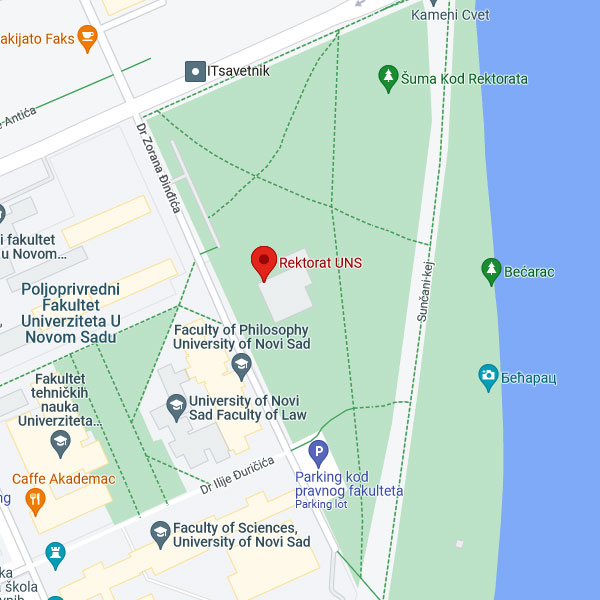
University of Novi Sad, Rectory
21000 Novi Sad, Serbia
Dr Zorana Djindjica 1
sviconference.org | all rights reserved